
Why feed pellet PDI results differ between laboratories
Investigate a difference in pellet PDI by comparing sampling points, sieves, test duration and replicates before adjusting the production line.
On this page
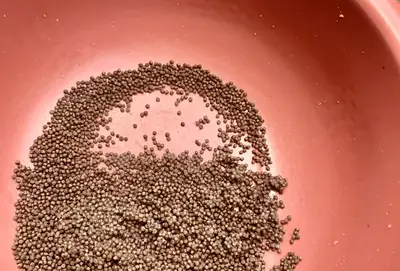
The supplier samples pellets at the cooler outlet. The buyer’s lab samples them after the journey. Before comparing PDI figures, establish what happened to the pellets between those points and whether the two labs used the same test procedure.
The Pellet Durability Index (PDI) describes how well pellets resist breaking into fines during handling. On a Holmen NHP100, the operator weighs the sample, tests it in an air stream for the selected time and weighs the remaining pellets. Agree on the time and method with your supplier before comparing values. [1, 2]
Five records for comparing PDI results
- Origin. Match the feed, lot code, collection time and sampling point.
- Preparation. Check pellet diameter, storage, sieve and how fines were removed before the test.
- Settings. Record the model, instrument ID, test time and both masses where weighing is manual.
- Repeats. Compare all results. Record the reason and approval for any exclusion.
- Instrument condition. Review maintenance and any interruption during testing. Flag the affected samples.
Agreeing a PDI limit for incoming feed
Agree on an acceptance value for the product, sampling point and method with the customer. TEKPRO relates PDI targets to the needs of the user and market. If the two labs use different methods, compare paired samples first to see what the difference means. [3]
Agree on the test location too. The NHP100 can travel between sampling points, the NHP200 automates work at a QC bench, and the NHP300 is designed for the production line. If you are discussing these options with AE, give the pellet diameter, peak sample count and who needs the result. [1]
Sources and further reading
- TEKPRO · Holmen FAQs
- TEKPRO · Holmen NHP100 portable pellet durability tester
- TEKPRO · What should my Pellet Durability Index (PDI) be?