
Proximate analysis of food and feed from sample to report
Moisture, ash, protein, fat and fibre each need a method. Start by checking the reporting basis when comparing two certificates of analysis.
On this page
One supplier quotes 20% crude protein on a dry-matter basis. Another quotes 18% as received for meal containing 10% moisture. Which is higher? Divide 18 by 0.90 and the second figure also comes to 20% on a dry-matter basis. Check the reporting basis before using proximate analysis to choose a supplier. [1]
Which proximate components are measured or calculated?
A classical feed panel measures moisture, ash, crude protein, crude fat and crude fibre. The sixth component, nitrogen-free extract (NFE), is calculated. When every input is expressed as received, NFE (%) = 100 − (% moisture + % ash + % crude protein + % crude fat + % crude fibre).[2]
A food customer requesting proximate analysis may want total carbohydrate calculated by difference, or a separate measurement of total dietary fibre. If total carbohydrate includes fibre, keep fibre in that total. Agree on the definition and calculation before the lab starts work.[2]
Choose methods for moisture, ash, protein, fat and fibre
Moisture and ash. Oven drying can drive off other volatile components along with water, so choose a moisture method that suits the sample. For total ash, the lab weighs the inorganic residue after ashing. Calcium or iron content requires a separate elemental determination.[2]
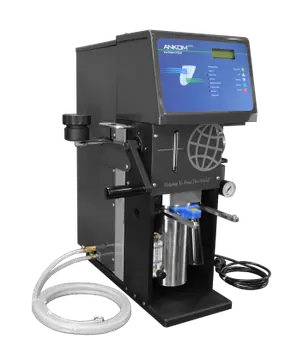
Protein and fat. For crude protein, the lab measures nitrogen by a method such as Kjeldahl or Dumas, then applies the appropriate conversion factor. Record the factor alongside the result. The ANKOM XT15 handles solvent extraction for crude fat. When a total-fat method requires acid hydrolysis, the ANKOM HCl system prepares the sample before extraction. Researchers have compared both ANKOM workflows with Soxhlet extraction on beef and pork cuts.[2][3]
Fibre. The ANKOM 200 and DELTA process feed samples in batches for crude fibre. They differ in how the analyst or instrument delivers reagents and rinses. Check whether the specification calls for crude fibre, ADF, NDF or total dietary fibre (TDF). Each refers to a different determination.[2][4]
When can NIR help screen incoming materials?
When trucks arrive in quick succession, AgriNIR 4.0 and X-NIR can help screen lots if an appropriate calibration covers the material and parameter. The AgriNIR 4.0 EvoNIR sensor can move from its portable case to compatible machinery with the appropriate kit. An operator can carry the handheld X-NIR directly to the sampling point.[5][6]
Check NIR predictions against a reference method when the material or supplier changes. Agree which results near an acceptance limit will need laboratory confirmation.[2]
To discuss a panel with AE, mark the parameters, reporting basis and methods on a sample certificate and add your daily sample count. You can remove supplier details.
Sources and further reading
- University of Nebraska–Lincoln Extension. Feed Dry Matter Conversions.
- FAO. Food Composition Data, chapter 7. Review of methods of analysis.
- Comparison of fat extraction methods in muscle and meat cuts. Archives Animal Breeding, 2008.
- ANKOM Technology. DELTA Fiber Analyzer operator’s manual.
- Dinamica Generale. AgriNIR.
- Dinamica Generale. X-NIR.