
When can portable NIR cut testing costs at a feed mill?
Calculate the cost per lot released or held. Compare handheld X-NIR and modular AgriNIR 4.0 with current waiting times and confirmation costs.
On this page
How long does a maize truck wait after sampling? Log the trip to the lab, the queue for testing and the time the moisture result reaches the intake team. If most of the delay comes before measurement, try testing at intake and identify which costs would actually fall.
A handheld unit for staff who work across sites
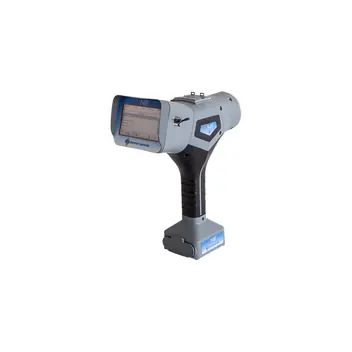
X-NIR is a handheld NIR analyser for grains and forages. An operator can carry it between the warehouse and the intake bay and take readings without an internet connection. For maize, for example, check that the unit has a moisture calibration for the material in the form you receive it. Follow the mill’s sampling procedure so the sample represents the lot. [1] [2]
A modular sensor for jobs that run at different times
With AgriNIR 4.0, staff can test samples in the portable case. When the job moves to a machine, the same EvoNIR sensor can be mounted on compatible equipment, such as a feed mixer, using the appropriate fitting kit. Have the machine make and model to hand when choosing a configuration. [3] [4]
Check the shift schedule before buying. If the intake team and the mixer operator both need readings at the same time, sharing one sensor will leave someone waiting. If the jobs run at different times, include the time it takes to move and set up the sensor in your trial.
Work out the cost per lot cleared or held
Choose one material, one parameter and one QC decision. Compare the two workflows on comparable lots.
At a busy mill, more samples share the fixed cost of the instrument. One scan can also return several calibrated parameters. Count samples and lot decisions separately because several samples may come from one lot. If the contract or release procedure requires a reference determination for that parameter on every lot, include that test in both cost scenarios.
Record two figures separately.
- Waiting time per lot. Start when staff take the sample and stop when they can make the decision. Include the wait for lab confirmation wherever it is needed.
- Cost per lot. Add the instrument cost allocated to the study period, calibration, staff time, sampling, transport and reference tests. Divide by the number of lots for which a decision was reached in that period. For a machine installation, include the kit and fitting costs.
During the trial, compare the NIR reading with the reference result for the same sample. Agree on an acceptable difference and when the team should ask the lab to confirm a result. Pay particular attention to readings close to an acceptance limit and samples outside the calibration’s scope. [2] [5]
A faster reading saves cash when it reduces an actual expense, such as sample transport, overtime or truck detention charges. Check the mill’s own cost records to put a figure on it.
Considering a unit for your mill? Tell the AE team which material you test, the parameter, the number of lots per day and where you take readings. For a machine-mounted sensor, include the make and model. That gives us a starting point for deciding which configuration to trial first.
Sources and further reading
- Dinamica Generale. X-NIR.
- Dinamica Generale. NIR Calibration.
- Dinamica Generale. AgriNIR.
- Dinamica Generale. EvoNIR.
- ISO 12099:2017. Animal feeding stuffs, cereals and milled cereal products — Guidelines for the application of near infrared spectrometry.
What does one QC decision cost?
Divide total QC costs for one period by the number of lots accepted or rejected. Use the same period and quality criteria for both workflows.
For the NIR estimate, include the instrument cost allocated to that period, staff time, calibration, and any reference tests you still need.
- Current cost per lot
- Estimated cost per lot with NIR