
NIR in palm oil QC: planning a palm kernel meal moisture trial
Considering NIR for moisture in palm kernel meal? Check calibration coverage, reference results and how much time a trial could save per lot.
On this page
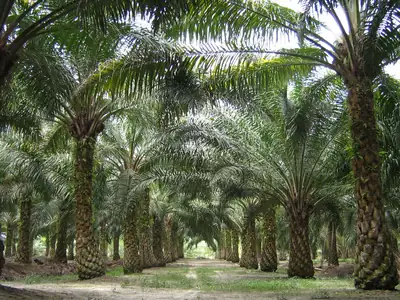
A mill wants a moisture result before deciding whether to accept a load of palm kernel meal. First confirm that a calibration covers the material and parameter. If one is available, compare NIR readings against reference results on local lots and time how long it takes for the operator to reach a decision.
Indonesia is the world’s largest palm oil producer according to the November 2026 USDA report. At PALMEX 2024, the AE team saw an opportunity to bring quality measurements closer to daily mill decisions. Their value depends on whether operators can act on the result. [6]
Which calibration covers your palm material?
Whole fruit, mesocarp, kernels, palm kernel meal or expeller (PKM/PKE), and crude palm oil (CPO) are different materials. Specify the parameter, process variation and expected range. NIR estimates composition from spectra using calibrations built against laboratory measurements. Those calibrations need to represent the material being measured. [3]
On AgriNIR 4.0, the EvoNIR sensor can move between the portable case and a compatible machine, such as a forage harvester or feed mixer, with the correct kit. Dinamica Generale calls this NIReverse. X-NIR is a handheld option for supported forage and grain families. Compatibility with a specific agricultural machine does not establish suitability for a palm mill processing point. [1, 2, 7]
In the public calibration lists we checked on 18 November 2026, we did not find a palm material family for either instrument. Before proposing an application for PKM/PKE, kernels, mesocarp or CPO, AE needs to confirm the applicable calibration with the manufacturer and compare predictions with reference results on local samples. [4, 5]
How to assess turnaround time, cost and yield in a mill trial
For decision time, start the clock at sampling and stop it when the operator can act. Include preparation, repeats and laboratory confirmation for readings close to the acceptance limit.
For cost, count the cost per usable result. Include staff time, sample transport, reference tests, consumables, software, maintenance and calibration management.
For extraction yield, record which operating action changed because of the QC result. Examine oil losses and the mass balance under comparable process conditions. A shorter scan time alone does not establish a yield improvement.
To plan a trial with AE, begin with one material, one parameter, your acceptance limit and an example laboratory result. Daily lot counts help determine whether avoided sample movements or shorter waits could justify the investment.
Sources and further reading
- Dinamica Generale · AgriNIR 4.0
- Dinamica Generale · X-NIR
- Dinamica Generale · NIR technology in agriculture
- Dinamica Generale · Calibration list linked from AgriNIR
- Dinamica Generale · Calibration list linked from X-NIR
- USDA FAS · Oilseeds: World Markets and Trade, November 2026, Table 11
- Dinamica Generale · EvoNIR sensor and NIReverse